

Surf Fishing with a Drone: The Complete Beach Setup Guide
Surf fishing has always been about reading the beach and getting bait to the right spot. A drone doesn't change that — it just removes the distance limit. Here's the complete setup for fishing any beach with the Xpece ONE.

Surf fishing is one of the most accessible forms of fishing — all you need is a beach, a rod, and bait. The limitation has always been distance. The fish are often beyond where your cast lands: past the second sand bar, over the trough, out where the bottom drops and predators hold.
The Xpece ONE solves that problem without adding complexity. You don't need to learn advanced drone piloting — you need to know how to read a beach and where to put the bait. This guide covers both.
Reading the beach: where to drop
Before you fly a single meter, spend 10 minutes reading the beach. The most productive surf fishing spots are almost always visible from shore if you know what to look for.
Find the troughs
A trough is the channel of deeper water that runs between the beach and the first sand bar, or between two sand bars. It appears as a darker strip of water — calmer, deeper, and greener than the white water breaking on the bars. Fish travel and feed in troughs. Your first drone drop should almost always target a trough edge.
Identify the sand bars
Sand bars appear as lighter-colored ridges where waves are breaking in shallower water. The edges of sand bars — where the bottom drops back into the trough — are prime feeding zones. Drop on the offshore edge of the bar, not on top of it.
Look for cuts and rips
A cut is a break in a sand bar where water drains back to sea. These appear as areas of darker, calmer water cutting through the white water of the breaking bar. Cuts concentrate baitfish and the predators that follow them — particularly pompano, snook, and jack.
Tip: use the Xpece ONE's underwater camera feed to confirm what you see from shore — depth changes and structure show clearly in the live video before you commit the drop.
Time the tide
Incoming tide pushes baitfish over the bars and into the troughs — predators follow. The two hours either side of high tide is consistently the most productive window for surf fishing. On outgoing tide, fish the cuts as water drains back through the bars.

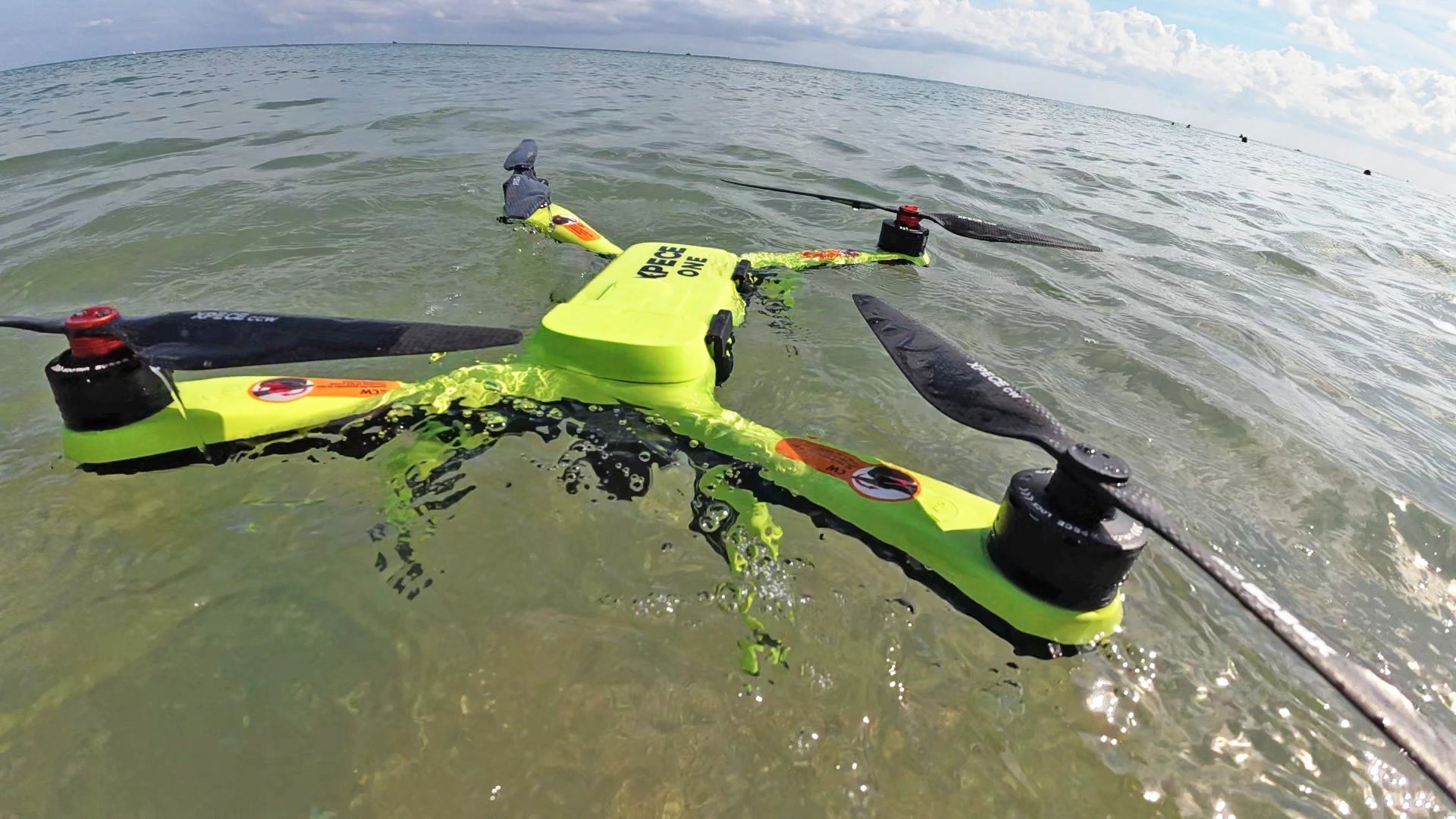
Launch position: drone low, rig attached, reel in freespool — ready to fly the bait past the bar.
Target species for surf drone fishing
The complete surf drone setup
Rod and reel
For surf drone fishing, a conventional surf rod in the 10–13 ft range paired with a conventional reel handles the long-distance fight better than spinning gear. The key requirement: a smooth, reliable freespool. The reel must pay out line freely while the drone flies out — any drag engagement during the run destabilizes the flight.
For line, 65 lb braid is the standard. Thin diameter, zero stretch, smooth pay-out. Read the full fishing line guide for drone fishing for species-specific recommendations.
Rig by species
| Target | Rig | Bait | Drop zone |
|---|---|---|---|
| Pompano | Pompano rig, 2 hooks, 2 oz pyramid | Sand fleas, shrimp | Trough behind first bar |
| Red drum | Carolina rig, 3/0 circle, 3 oz | Cut mullet, crab | Bar edge or trough |
| Snook | Fluorocarbon leader, live bait hook | Live pinfish, mullet | Cut or structure edge |
| Whiting | High-low rig, size 2 hooks, 1 oz | Sand fleas, shrimp | Shallow trough |
| Shark | Wire leader, 10/0 circle, 8 oz | Ladyfish, bonito chunk | Past second bar |
| Cobia | 60 lb fluoro leader, 5/0 J-hook | Live eel, pinfish | Ahead of visible school |

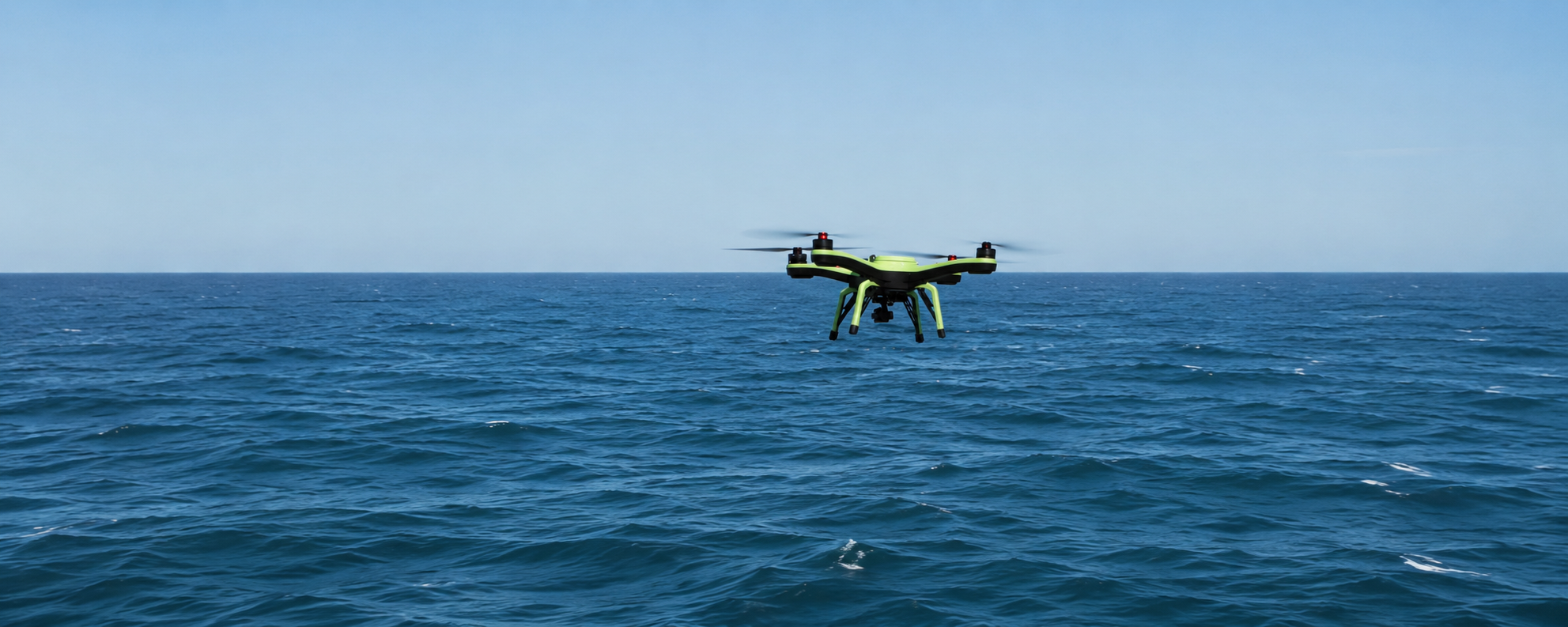
Flying the bait past the second bar — 300 yards in under two minutes, placed exactly on the trough edge.
Step-by-step: your first surf drone session
Arrive early and read the beach
Get there 30 minutes before you plan to fish. Walk the waterline and identify the bar pattern — where waves break, where troughs run, where cuts open in the bars. This is information no app or map can give you in real time.
Set up rod first, drone second
Spool your reel, tie your leader, rig your bait — all before the drone is unfolded. You want to attach the rig to the drone as the final step, not be rigging while the drone is armed and ready.
Set reel to freespool
This is the most important pre-flight step. Engage freespool on your reel and confirm line runs freely by pulling it by hand. Any resistance during the drone run will pull against the flight and can destabilize a heavy rig.
Fly a scouting pass first
Before dropping, fly out over your target zone and use the underwater camera to confirm the trough location, depth change, and any structure. A 60-second scouting pass is the best investment in bait placement accuracy you can make.
Tip: mark the coordinates of productive spots on the remote — return to them on every session without having to re-scout from scratch.
Drop, return, engage drag
Hover over the target, wait for the rig to stabilize, press the release. Fly the drone back immediately. Once it's landed and secured, engage your drag to fishing position and get to the rod.

The payoff — bait dropped exactly on the trough edge, precisely where the fish were feeding.
Beach etiquette for drone anglers
Drone fishing on a public beach requires awareness of other users. A few rules that keep everyone happy and keep you legal:
Fish early morning or evening when beaches are less crowded. Always launch and land away from swimmers and beachgoers. Keep your bait line clearly visible — a small buoy or flag marker on the line prevents other anglers from tangling with it. Never leave a baited rod unattended. And always check for local beach drone regulations before your session — some beaches restrict drone flight during peak hours.
What the Xpece ONE includes out of the box → Full accessories breakdown — everything you need for a complete surf fishing setup.Frequently asked questions
What is surf fishing with a drone?
Surf fishing with a drone means using a fishing drone like the Xpece ONE to carry your baited rig past the surf zone — over sand bars and into deep troughs — and drop it precisely where fish are feeding. It extends your effective range from 60–80 yards by casting to 300–500 yards offshore, from the beach.
What fish can you catch surf fishing with a drone?
Pompano, red drum, snook, whiting, kingfish, cobia, tarpon, and shark are all common targets for surf drone fishing. The drone is particularly effective for species that hold in offshore troughs and structure beyond normal casting range.
Is drone surf fishing legal?
Drone fishing is legal in most US states for recreational fishing. The Xpece ONE includes embedded FAA Remote ID for federal compliance. Local beach regulations vary — always check for drone restrictions in your specific location before flying.
What's the best time to surf fish with a drone?
Early morning and evening during the two hours either side of high tide. This is when baitfish are most active in the troughs and predators are feeding aggressively. Drone fishing at night is also highly productive for shark, drum, and snook.
How far can the Xpece ONE drop bait in the surf?
300–500 yards offshore in under two minutes, regardless of surf height or wind conditions up to around 25 mph. The drone's range is consistent across sessions — unlike a kayak bait run, it doesn't depend on your energy level or wave conditions.
Stop fishing where your cast lands.
Fish where the fish are.
Free shipping across the US in 1–4 days. 30-day money-back guarantee.
SHOP THE XPECE ONE →