

Complete Guide
How to Fish with the
Xpece ONE Drone.
Everything you need to know — from your first flight to dropping bait a mile out. No experience required.
01
What Is the Xpece ONE?
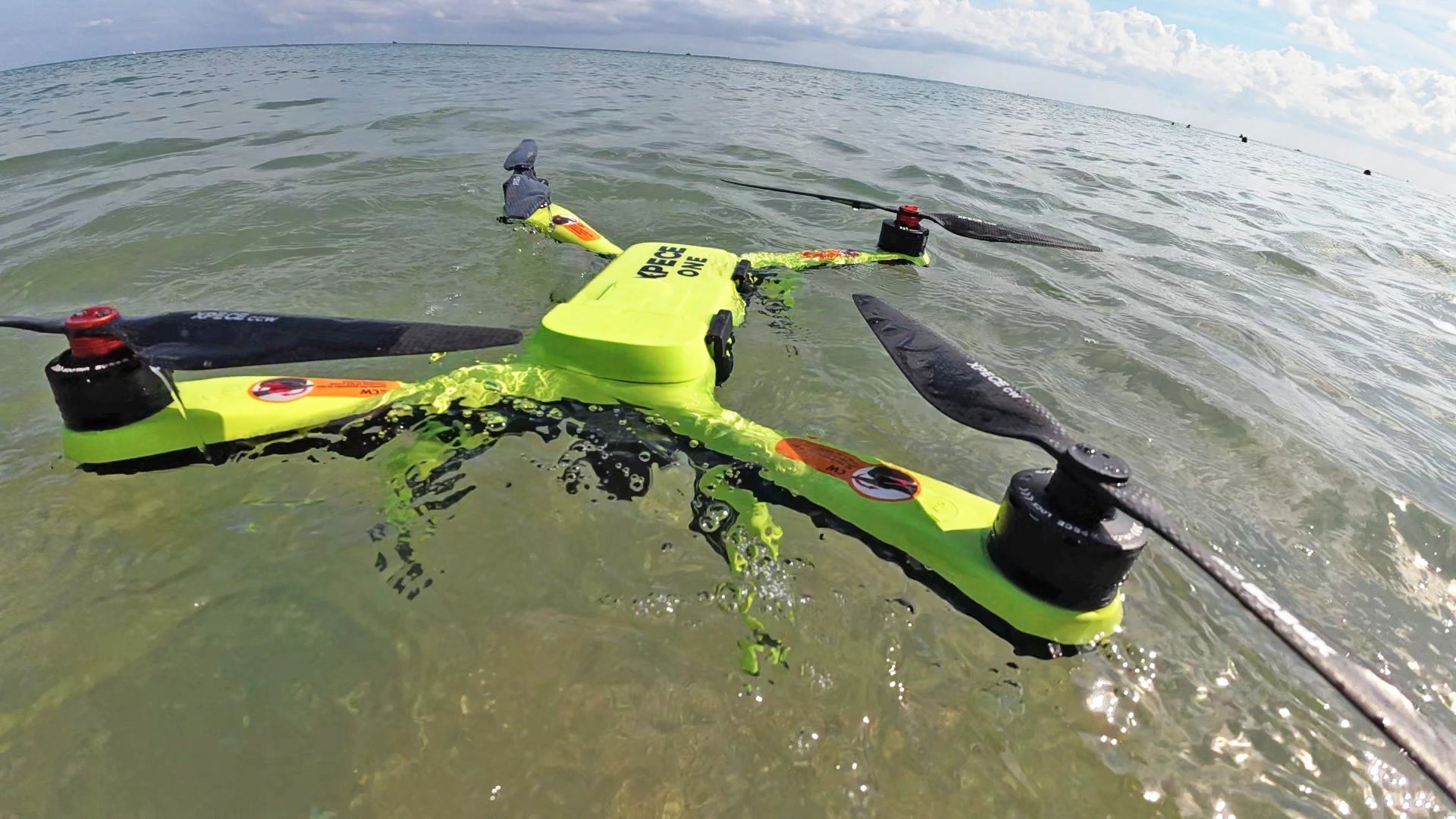
The Xpece ONE is a waterproof drone built specifically for fishermen. It carries bait up to 7 lbs and drops it precisely up to 1 mile offshore — no boat, no kayak, no app needed. Both the drone and the remote are IP67 waterproof, designed to handle saltwater spray, sand, and even accidental water landings.
Unlike traditional fishing methods, the drone lets you drop bait beyond the break, past sandbars, over reefs, and into spots completely inaccessible from shore. The built-in HD camera on the remote lets you scout fish in real time — before and after dropping your bait.
02
Key Specs at a Glance.
Know your equipment before your first cast.
03
Your First Flight — Step by Step.
Before you put bait on, fly the drone once empty. Get comfortable with the controls, learn how it hovers and responds to wind, and test the Return-To-Home function.
-
1Charge the battery fullyCharge until the indicator shows 100%. A full battery gives you maximum flight time. Never fly on less than 50% for your first sessions.
-
2Insert battery and power on the dronePlace the drone on flat ground. Insert the battery, then power on the drone first, then the remote. Wait for the LED indicators to stabilize.
-
3Wait for satellite lock (under 60 seconds)The remote display shows satellite count. Wait until you have at least 8 satellites for stable GPS hold. In open areas this takes under a minute.
-
4Select Slow mode for your first flightUse Slow mode until you are comfortable. The drone responds to stick inputs gently — perfect for learning how it handles in crosswind.
-
5Take off and hover at 5–10 feetPush the throttle gently upward. Let the drone stabilize in a hover. Practice moving left, right, forward, and backward before going higher.
-
6Test Return-To-HomeFly 50–100 yards out and flip the RTH switch. The drone will return and land automatically near your position. This is your safety net — know it cold.
-
7Land manually using the throttleSlowly reduce throttle until the drone descends. Let it auto-land or bring it down manually to your hand or a flat surface.
04
Bait Setup & Loading.
The Xpece ONE uses a precision payload release system. Loading it correctly ensures a clean drop exactly where you want it.
-
1Rig your bait on shore firstHave your full rig ready — hook, leader, bait, and sinker — before attaching it to the drone. Never load bait while the drone is powered on or props are spinning.
-
2Attach the rig to the payload release clipClip your main line to the release mechanism. Make sure the clip is fully engaged — give it a gentle tug to confirm it won't release prematurely.
-
3Keep your reel engaged with drag setYour fishing line should be running out freely from the rod. Set your drag loose enough to let line out as the drone flies — the drone is pulling the line, not carrying a fixed amount.
-
4Fly out in a straight lineHead straight out to your target spot. Avoid flying sideways with bait — it creates unnecessary drag and uneven line tension. Use the HD camera to watch for structure below.
-
5Hover, then trigger the releaseOnce over your target spot, hover briefly to stabilize. Press the release button on the remote — the bait drops cleanly. The drone is now free to return home.
-
6Hit RTH and tend your rodFlip the RTH switch immediately after the drop. The drone comes home on its own — you focus on your rod. Run up to 8 baits per battery charge in good conditions.
Recommended Bait Types by Target Species
| Target Species | Recommended Bait | Weight | Distance |
|---|---|---|---|
| Shark (Blacktip, Bull, Hammerhead) | Half mullet, stingray flap, bonito | 4–7 lbs | 200–1,000 yds |
| Tarpon | Live or dead crab, threadfin herring | 1–3 lbs | 100–400 yds |
| Red Drum / Bull Reds | Crab, cut mullet, menhaden | 2–5 lbs | 150–600 yds |
| Cobia | Eel, crab, live pinfish | 1–3 lbs | 100–500 yds |
| Striped Bass | Bunker chunk, clam, bloodworm | 1–4 lbs | 100–400 yds |
| Permit / Pompano | Sand flea, crab | 0.5–2 lbs | 50–250 yds |
05
Fishing Techniques.
The Xpece ONE opens up techniques that are impossible with traditional casting. Here are the most effective approaches.
Precision Spot Drop
Use the HD camera to identify structure — a reef edge, a color change in the water, or a rip current seam. Fly directly to that spot, hover, and drop. Mark the drop spot on your remote display so you can run a second rod to the exact same location.
Troll Fishing
The Xpece ONE can troll a bait for up to a mile over the water. Fly slowly along a depth change or current line while your bait is in the water. This is extremely effective for pelagic species that respond to movement.
Multi-Rod Spread
Run multiple baits to different distances and angles — 200 yds to the left, 500 yds straight out, 400 yds to the right. One battery charge is enough for 6–8 drops. Mark each drop spot so you know exactly where each bait is sitting.
06
Scouting Fish from Above.
One of the biggest advantages of the Xpece ONE is aerial reconnaissance — something no sonar or fishfinder can give you from shore.
-
1Fly at 30–50 feet for the best visibilityToo high and you lose detail. Too low and you spook fish. 30–50 feet gives you the widest field of view while keeping the camera angle usable.
-
2Look for color changes and structureDark patches = reef, rock, or grass. Foam lines and current seams concentrate bait. Brown or off-color water near the bottom = shallow structure worth targeting.
-
3Watch for baitfish schools near the surfaceNervous water, bird activity, or dense dark patches near the surface = baitfish. Predators are below. Drop your bait at the edge of or just below the school.
-
4Spot large fish directly in clear waterIn clear, shallow water you can often see sharks, tarpon, or rays directly. Fly quietly, approach slowly from upwind, and drop the bait just ahead of where they are heading.
07
Wind, Weather & Conditions.
The Xpece ONE handles 31 mph winds, but conditions affect both your flight and your fishing. Here's how to read them.
| Wind Speed | Flight Quality | Recommended Action |
|---|---|---|
| 0–10 mph | Ideal | Perfect conditions. Max payload, max range. |
| 10–20 mph | Good | Reduce payload to 4–5 lbs. Fly directly into/with wind. |
| 20–31 mph | Manageable | Light payload only (2–3 lbs). Stay closer to shore. Use slow mode. |
| 31+ mph | Do not fly | Above the drone's rated limit. Stay grounded. |
Tide & Time of Day
Fish are most active during moving tides — 1 hour before and after both high and low tide. Early morning (6–9am) and late afternoon (5–8pm) are peak feeding windows. Use the drone to scout during the first hour of light when visibility is best and fish are shallow.
08
Post-Session Aftercare.
The Xpece ONE is IP67 waterproof and saltwater resistant — but proper aftercare extends its life significantly.
- Rinse the drone with fresh water after every saltwater session — focus on the arms, motor mounts, and landing legs.
- Rinse the remote with fresh water and dry with a clean cloth. The screen area is sealed but avoid submerging it unnecessarily.
- Remove the battery after every session. Never store the drone with the battery installed.
- Store the battery at 50–60% charge if not flying for more than a week. Full charge storage degrades lithium batteries faster.
- Check propellers for nicks, cracks, or warping before every flight. Replace any damaged prop immediately — never fly with a damaged prop.
- Clean the camera lens with a microfiber cloth. Salt crystals on the lens degrade video quality significantly.
- Inspect the payload release mechanism for sand or salt buildup after every session. A light rinse and dry keeps it releasing cleanly.
- Store in the carry case away from direct heat and sunlight. Extreme heat degrades both the battery and the electronics.
09
Frequently Asked Questions.
The most common questions from new Xpece ONE owners.
Ready to fish smarter?
Free 1–4 day US shipping · 30-day money back guarantee · FAA RemoteID compliant